

How To Clean Resin Measuring Cups

Epoxy is the near temperamental of all the resins; if the components are not measured correctly, the cloth may go on to be sticky, and it may never reach its total chapters in terms of its strength properties.
I take fantabulous news: estimating epoxy components by volume or weight is straightforward. I will illustrate how to behave out either of these methods. The good news is that information technology is simple to measure epoxy elements past volume or weight.
Since the discussion is nigh the measurement of resin, let's have a rapid and short voyage for some jargonic terms to accept more clarity while measuring resin through volume or by weight.
So the first thing you need to embrace is What exactly is an epoxy system, though? Furthermore, what exactly is a mix ratio?
What is an epoxy system and a Mix Ratio –
And then to understand, in layman'southward terms, an epoxy resin and epoxy hardener that makes up an epoxy system are made to operate together. When you mix the two parts in the right amount of resin to hardeners, the correct cure will happen.
Similarly, a mix ratio tells yous how much epoxy resin and hardener to use in your mixture. Typically, A is a resin, and B is a hardener. 1:i, two:i, 3.1, etc., are the near frequent mix ratios.
An epoxy resin follows a hardener. For example, 1A:1B is also an acceptable ratio for a combination. Information technology is stated on the labels and data sheets of the product.
To make up one's mind whether components are measured in weight or volume. From here, nosotros land on an essential part of the discussion:
What Is the Difference Between a Mix Ratio Calculated Using Book and One Calculated Using Weight? And I approximate you're probably surfing with the aforementioned question, isn't it?
Difference Between Mix Ratio by Book vs. Weight –

So, A variable mix ratio will always be needed when mixing epoxy resin and hardener considering of the varying densities of these two components.
Since the epoxy resin and hardener ingredients have varying weights, an epoxy with a ane:1 volume mix ratio may have a 100:83 volume mix ratio. A mix ratio past weight and a volumetric ratio are two standard formats epoxy producers provide.
I promise that this technical terminology isn't making your head spin, but in whatever instance, without further ado, let's discuss the process for determining the weight of the epoxy resin.
Procedure to Make up one's mind Epoxy Resin Weight –
Without a scale, information technology is possible to estimate the importance of the epoxy resin. Using 'weight' measurements like sugar and h2o, for instance, is 1 option.
Using volumetric measures like cups or spoons is an boosted option. Your findings will be more accurate if your measurements are consistent each time.
Varying resin kinds take different densities that must be considered while weighing epoxy.
In other words, their weights will vary even if you lot're using the exact volume measurement to compare two different resins. Calculating densities and Converting volume information to weights is the preferred method for comparing the weights of diverse resins.
In addition, measuring resin using cups has its own benefits and drawbacks; allow'southward expect at both.
Pros and Cons of Measuring Resin using Cups –
| PROS | CONS |
| 1. Mixing and measuring are washed in the same cup, then you don't accept to bother most scraping out equal quantities of resin or hardener. | i. Information technology'due south okay to make errors. To put the correct measurement in the measuring cups, it's necessary to figure out how much more of the beginning portion you'll need if yous pour as well much of the second into the loving cup. |
| 2. Verifying that you have used the right proportions of resin and hardener is simple. | 2. You need to employ four times every bit many cups. |
| – | iii. A more sticky portion makes it challenging to scoop equal quantities of each into the mixing cup. |
Because of this, measuring resin in cups may be laborious and fourth dimension-consuming. Still, if y'all know how to practice information technology correct the commencement time, you won't take as much trouble doing information technology again.
To complete the procedure, you'll need a niggling wit and cognition of how things work. In light of this, permit me to widen your perspective on the other side of the coin, measuring the amount of resin using a measuring cup.
Measuring Resin Using Measuring Loving cup –
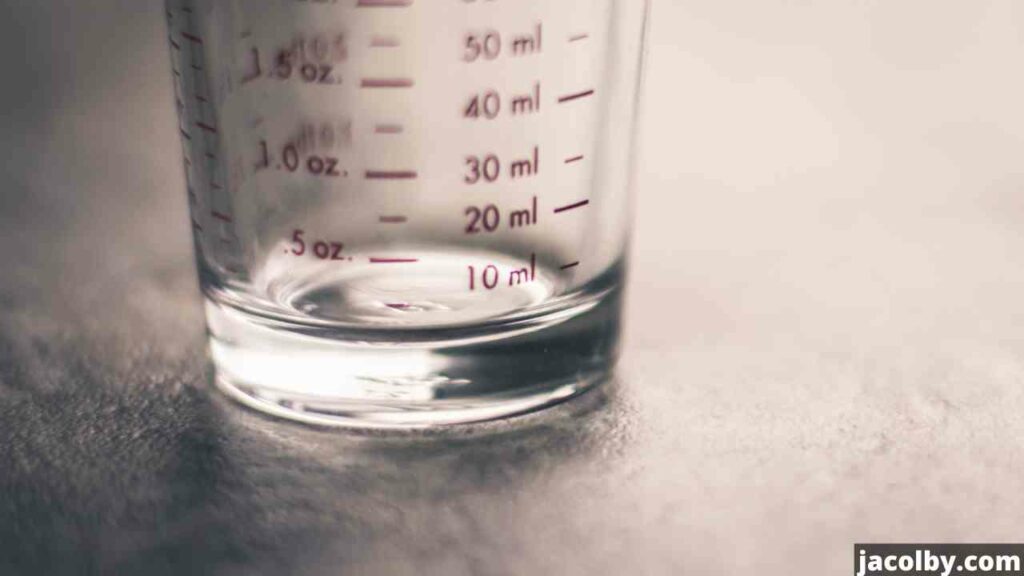
Pouring epoxy into mixing cups or using metered pumps to deliver the advisable mix ratio focuses on measuring epoxy by volume rather than weight.
And so when y'all wish to correctly quantify and distribute the resin and hardener ingredients in relatively tiny amounts, such as less than an ounce or up to a couple of ounces, the metered pumps are a valuable tool.
These pumps are pre-calibrated to distribute the exact ratio of epoxy resin and hardener. With pumps, epoxy cures reliably and leaves a minimal mess.
Steps for dispensing epoxy using metered pumps:
- Pumps should be primed. To capture waste product, insert a cup below the pump caput. Pump until a steady stream emerges. Switch pumps. Not for usage.
- Squeeze the epoxy resin pump once into a clean mixing cup.
- And then inject the hardener.
- Blend epoxy resin to hardeners until you become the necessary amount.
Earlier I necktie up this article with a covert conclusion, hither is a trail of tips and advice you need to follow when measuring the resin and combining it with the hardener.
1. The ideal proportions for mixing –
Kickoff, various epoxy resin manufacturers have varying mixing ratios. In add-on to resin and hardener ratios of 1:i or 2:1, manufacturers may specify 100:45, which can also puzzle my listen.
Before combining, read the manufacturer's directions advisedly. If you don't follow these directions, the resin may not cure. Our epoxy resin computer determines the platonic mixing ratio.
ii. Take Note of the Temperature of the Environment –

One of the near important things you need to know near resin is that it's very heat-sensitive. Consequently, while mixing the resin, you lot must also pay attention to the temperature of the surrounding environment.
The resin cures more than slowly below 20°C. Surface wax, and amine reddening, may too occur. Before processing epoxy resin, this must be eliminated. This clearance is complex.
The resin may crystallize if the temperature dips beneath 20° C. Above 20°C, the resin'south response time rises. This pertains to curing and processing times. At high temperatures, a longer-processed product is preferable.
three. The Importance of Moisture in the Process –
Even piddling errors may cause chaos. Just like resin, hardener reacts to the atmosphere. If dampness is over 65%, keep the hardener container closed. The material's quality will decrease if non used promptly.
4. Take Farthermost Circumspection When Combining the Constituents –
Mixing the ingredients is what I strongly stress. Resin and hardener must exist well mixed for a good end product. If you're non cautious, incompletely cured, damp areas in the resin or varying hardness levels in a workpiece may event.
When mixing, observe that resin adheres to the container'due south edge. Since this affects the mixing ratio, don't combine extremely tiny volumes of resin and hardener.
FAQs –
ane. How do I mensurate the resin and hardener correctly?
You tin can measure the resin and hardener using a measuring cup. To practice it correctly, you'll need to know how to do it. This article has the steps for measuring the resin and hardener correctly; merely glimpse over information technology to know.
ii. What is the ideal mix ratio for the resin and hardener?
Different types of epoxy resin have different mix ratios. Before yous combine the resin and hardener, make sure to read the directions carefully. If yous don't follow the directions, the resin might not cure.
3. What happens if I don't follow the manufacturer's directions for mixing the resin?
You should always read and follow the manufacturer'due south directions for mixing epoxy resin. If y'all don't, the resin may not cure properly, leading to an inferior production.
iv. What should I do if the resin's temperature is too hot or as well common cold?
If the temperature is too hot, you should wait for it to cool down before continuing with the mixing process. If it'south too common cold, you can utilise a heater to raise the temperature.
5. What result does moisture have on the resin?
Moisture can affect the quality of the resin, and then it's essential to keep the area dry while you lot're working with it. If not, the resin may not cure properly.
Conclusion –
Your resin is now ready for usage. Before mixing your epoxy, make certain you lot've read the condom instructions, handling instructions, and technical data sheets that came with it.
Whether you estimate epoxy ingredients by weight or volume, follow the epoxy manufacturer's recommended resin to hardener ratio.
Source: https://jacolby.com/how-do-you-measure-resin-on-a-measuring-cup/
0 Response to "How To Clean Resin Measuring Cups"
Post a Comment